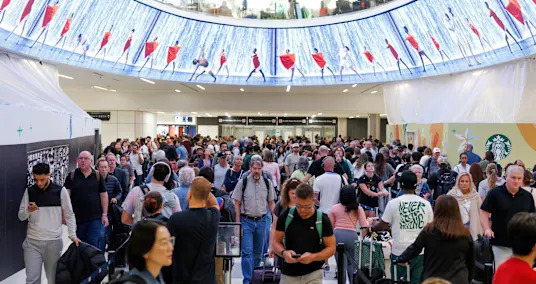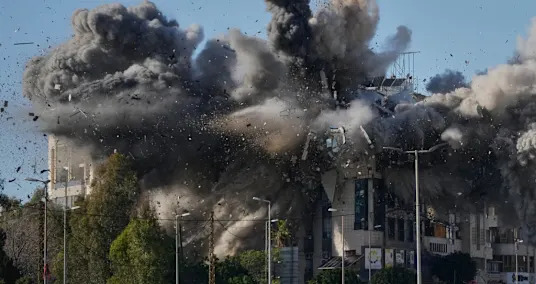
The US-Israel war on Iran and its ripple effect throughout the Middle East have had a devastating impact on Arab countries, with millions expected to slide into poverty, according to the United Nations.
A UN Development Programme (UNDP) report published on Tuesday said that gross domestic product (GDP) in the region was estimated to decline by approximately 3.7 to 6 percent after a month of war, equivalent to a contraction of $120bn to $194bn.
Abdallah Al Dardari, UN assistant secretary-general and director of the UNDP Regional Bureau for Arab States, said that 3.7 million jobs will be lost and about four million more people in the region could fall below the poverty line, noting that the war had highlighted the “fragility in the Arab economy”.
The report was based on projections of “a short but intense conflict lasting for four weeks”, signalling that the impact of the war, which has seen Iran attacking Gulf energy infrastructure and squeezing oil and gas exports through the Strait of Hormuz, will likely be even higher if it drags on longer.
Issued as tight oil supplies pushed Brent crude futures up 4.7 percent to more than $118 per barrel, the report said, “risks in strategic maritime corridors” had “knock‐on effects on inflation, trade flows, and global supply chains” that could undermine livelihoods in the Middle East’s “interconnected economies”.
It added that increases in poverty rates were “concentrated in the Levant and fragile countries (Sudan and Yemen), where baseline vulnerability is highest and shocks translate more strongly into welfare losses”.
The report noted that Lebanon, dragged into the war after Hezbollah struck Israel in retaliation for the US-Israeli killing of Iran’s Supreme Leader Ayatollah Ali Khamenei on February 28, is especially impacted, with “ongoing air strikes and evacuation orders … already causing widespread destruction of residential areas, transport infrastructure, and public services, alongside large‐scale displacement”.
“We hope the fighting will stop tomorrow, as every day of delay has negative repercussions on the global economy,” said Al Dardari.
LATEST POSTS
- 1
 Climate engineering would alter the oceans, reshaping marine life – our new study examines each method’s risks
 - 2Heat Wave Fuels Massive Wildfire In Australia
- 3Ukrainian Army Converts E38 BMW 7-Series Into Multiple Rocket Launch Platform
- 46 Exemplary Mexican Dishes
- 5Somalia set for 'historic' first offshore oil drilling


- Schools to start reopening after Nigeria mass abduction
- Step by step instructions to Explore Assessment Ramifications of Disc Rates
- German hauliers warn soaring energy prices may soon impact consumers
- Iran executes two men who tried storming military facility during January protest crackdown
- From blowouts to big interiors, ‘Tuscan Mom’ style is Gen Z’s answer to beige burnout
- Blue Origin’s New Glenn rocket landed its booster on a barge at sea – an achievement that will broaden the commercial spaceflight market
- 'All Her Fault' ending explained: The shocking conclusion to the psychological thriller inspired by true events
- Airport wait times won't return to normal until Congress reaches a deal to pay TSA. Here's why they still can't come to an agreement.
- South Korea president says Iran war shows the need to ditch ‘extremely risky’ fossil fuels